
By Clarinda Solberg, Founder and Principal Consultant – Tended Roots Collaborative
I walked into a FINNOVATION class expecting to build my skills in social entrepreneurship after launching Tended Roots Collaborative earlier this year. By the second week, I walked out seeing work I’d done for years in a completely new way.
As a Finn Fellow, we are challenged to learn and grow beyond the cohort. Early on, FINNOVATION Institute Executive Director Dr. La Juana Whitmore challenged us to set goals – measurable ones with concrete, visible evidence of our progress.
What I didn’t expect – were the goals I didn’t define. I realize that as FINN Fellows we are accessing, developing and refining our ability to be strategic in the value that we create – and social entrepreneurship is the vehicle.
As part of our curriculum as Finn Fellows, I was introduced to different business model patterns. One leapt off the page at me in particular. I remember coming to class as if maybe I discovered some very essential seed in the universe – multi-sided platforms. Alexander Osterwalder and Yves Pigneur write about this in their book, Business Model Generation:
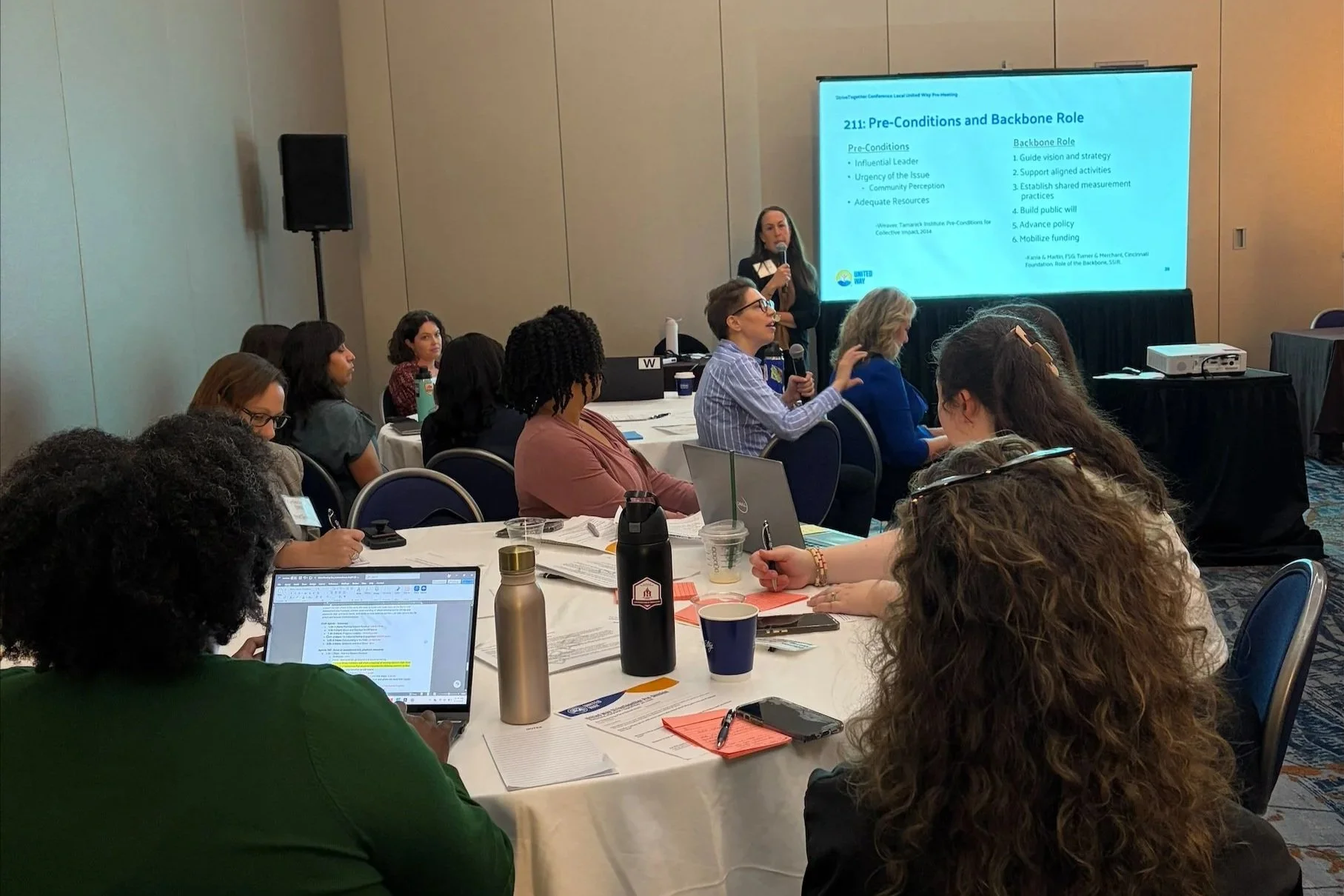
United Way Worldwide pre-session at the StriveTogether Cradle to Career Convening in Baltimore, Maryland October 2026 co-presented with United Way Worldwide Place-Based Advisory Council consultants
“Multi-sided platforms bring together two or more distinct but interdependent groups of customers. Such platforms are of value to one group of customers only if the other groups of customers are also present. The platforms creates value by facilitating interactions between the different groups A multi-sided platform grows in value to the extent that it attracts more users, a phenomenon known as the network effect.”
This pattern struck me because it is the pattern of collective impact – a field I have been working in for years as a part of the national StriveTogether network within a local United Way.
Let me illustrate an example of collective impact.
No single organization owns housing stability in a community, yet many hold a piece of the solution. The school district cares because its youngest learners are hit hardest when families are displaced. LegalAid can offer low-cost representation to tenants facing eviction but is too overwhelmed to reach them early. A community foundation has a fund for stable housing but needs to know where it will do the most good. A navigator network has the trust of families but needs to know whom to reach. And the data infrastructure that matches eviction filings in the legal system against school enrollment records is what lets them find at-risk families before they lose their homes. None of them can solve the problem alone. A backbone organization in collective impact must effectively facilitate interactions between all of these entities to achieve powerful impacts at a population level – and the value comes from the ability to have the relationships to bring those entities into strategic collaboration. …Just like the business model pattern!
Why This Matters: I have learned, in ways that are powerful to me, that a business model has very little to do with a business. A business model is actually about what value create, for whom, and what you have to be excellent at to deliver it. This is about leadership, and it applies to a collective impact focused collaboration as much as a company. It creates the clarity which both investors and organizations need.
In collective impact, a backbone’s value is that multi-sided platform pattern – the relationships, convening partners, and shared data that enable joint population level outcomes – which cannot be achieved alone. However, it’s less visible – and for the skeptics that want an easy sell to investors, an organization may pull resources away from the backbone role to fund individual programs. The tangibles anyone can understand. It’s a short-term move with a long-term cost that can erode an organization’s leadership and partnership in a community – the very value a backbone brings. And actually? It’s strongest asset with funders who want to see strong collaboration and partnerships consistently at the table.
Making that work more visible is kind of a passion of mine. So this pattern was an epiphany.
Beyond my social enterprise with FINNOVATION Institute, I have been applying my learning as a FINN Fellow as an external consultant on United Way Worldwide’s Place-Based Partnership Advisory Council. Supported by Blue Meridian Partners, I’ve been helping to lead the creation of tools and technical assistance that can support United Ways across the country identify their role and contribution to collective impact, a field that is often challenged with being understood but is impactful in moving systems – policies, practices, and partnerships – for better community level outcomes. Often, a nonprofit is the “backbone” to these initiatives so I had no idea that studying business and entrepreneurship would help unlock possibilities in this field.
This is where I connected learning in FINNOVATION to my work with United Way Worldwide. Local United Ways function as a multi-sided platform. On one side are the partners: school districts, legal aid, funders, and navigators who each bring a capability. On the other are community members who want to be part of the solution but have no easy way in. Through workplace campaigns, local United Ways stand directly in front of individuals in a way no other nonprofit in the community does, turning an employee's paycheck contribution into a share of a coordinated effort they could never build on their own. Like any platform, its value grows with participation: more donors bring more resources, more resources attract more partners, and more partners produce visible results that bring in more donors. And, powerfully, local investment from workplace campaigns can unlock resources beyond the community and draw them in. It’s a sign of credibility within a community that engenders the trust of outside funding. This perspective, while it needs further development, adds valuable detail to conversations (see also: Place-Based Investment: how the United Way model shares the principles of PBI to strengthen communities).
As we work to communicate the value proposition in place-based, collective impact initiatives, I realize that my learning as a Finn Fellow and entrepreneur directly impacts my ability to speak more clearly to investors about this kind of approach to wicked, complex challenges with investors in the space that my work with FINNOVATION is also situated.
I recently sat down with Shital C. Shah at United Way Worldwide who serves as Senior Advisor for Special Initiatives and Foundation Relations. Shital is a former Biden-Harris appointee and has served as the Senior Advisor to the 12th U.S. Secretary of Education and Director of Strategic Partnerships at the U.S. Department of Education. More important though, is the magic that surrounds Shital. Her smile, authenticity and presence light up a room! I’ve been working with Shital on the United Way Worldwide Place-Based Advisory Council that I introduced earlier.
------
Shital, I think you might recall the meeting I joined where I couldn’t get this business model pattern out of my head. Thank you for joining me! You’ve been with me on this journey as a FINN Fellow.
Clarinda: A multi-sided platform creates value by bringing together distinct groups who need each other, and it grows stronger as more of them join. If we see United Way as that kind of platform in place-based work, what does that unlock?
Shital: It unlocks the critical components of systems change and scale. UWs are poised to take on population level changes, which require cross-sector collaboration, leading to overall systems change, translating to more supports, resources, access and opportunities for our youth and families.
Reflection: Fragmentation is a critical business issue. Silos are also a real barrier to improving community conditions. It’s exciting when backbone organizations – including local United Ways – can make a strategic shift to go beyond program impacts.
Clarinda: What’s especially powerful for you about how this work in place-based partnerships adds to the value proposition of United Way Worldwide?
Shital: In addition to being a conduit for transformational funding, UWW is able to achieve deep and durable impact through the strength of their local UW Network. each UW has an unique local context and knows best what will work and take root locally. They are able to convene and mobilize the Network of local United Ways around a common north star - all communities thriving. We are also able to convene national allies and experts to help us move towards the impact we seek through our Network.
Reflection: For readers and investors, FINNOVATION Institute is having a transformative effect beyond the initiative that I brought forward as a FINN Fellow. I want to thank you sincerely for your investment and encourage you to engage.
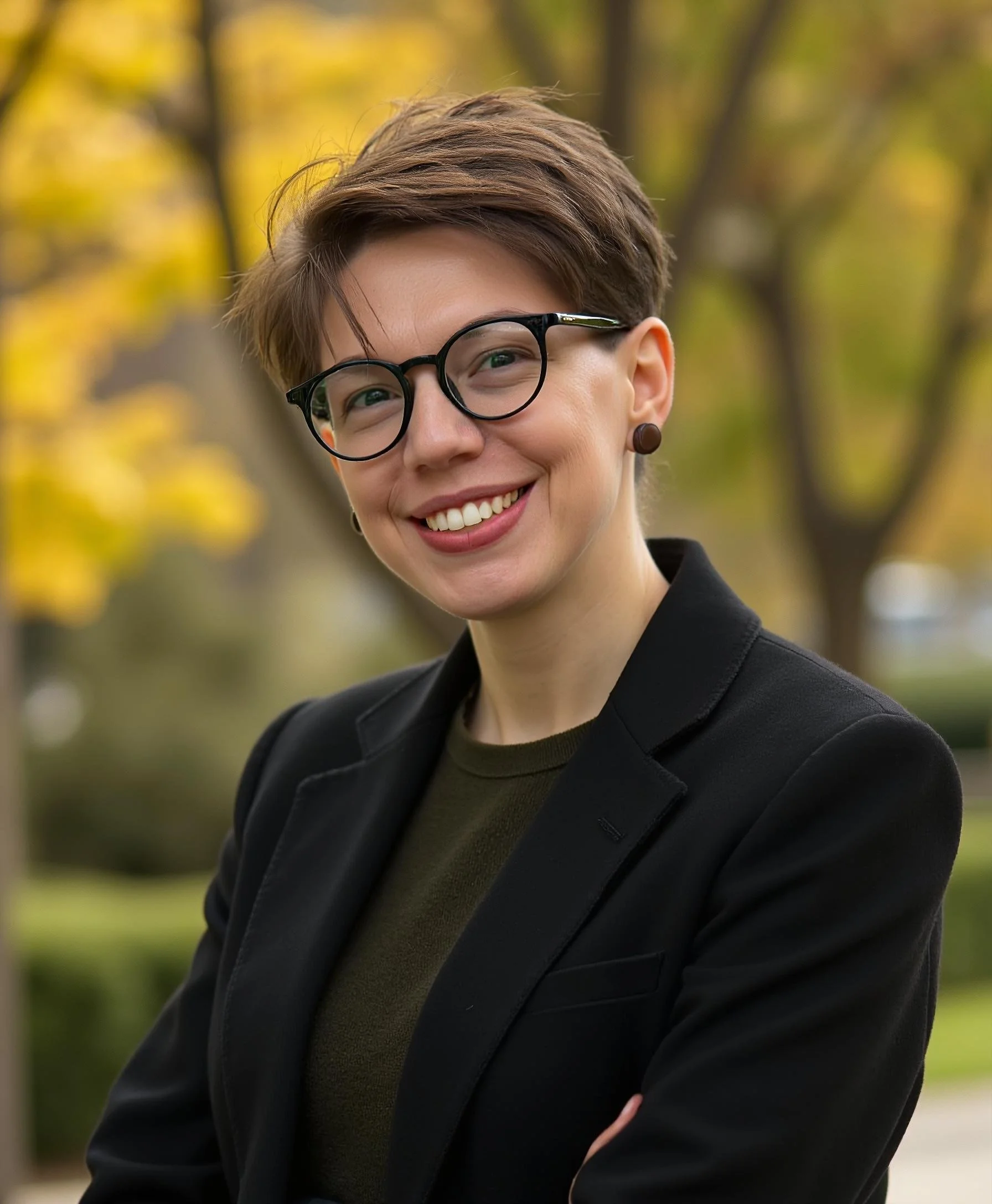
Clarinda Solberg is the Founder and Principal Consultant of Tended Roots Collaborative.
Tended Roots Collaborative is building shared data infrastructure for place-based coalitions. Through integrated data systems, shared measurement, facilitation, and partner capacity-building, Tended Roots helps public, nonprofit, healthcare, education, and community partners align evidence and act together on complex local challenges. Its model is designed to strengthen collective decision-making so communities can better address unequal outcomes across health, education, housing, childcare, food security, and economic mobility.